Building a Weekly Rhythm That Actually Lasts
A weekly rhythm only works when it reflects how you really live. Here is a calm, flexible framework you can maintain for the long term.
Elena Marsh
Editor, Wellbeing·August 4, 2026·7 min read
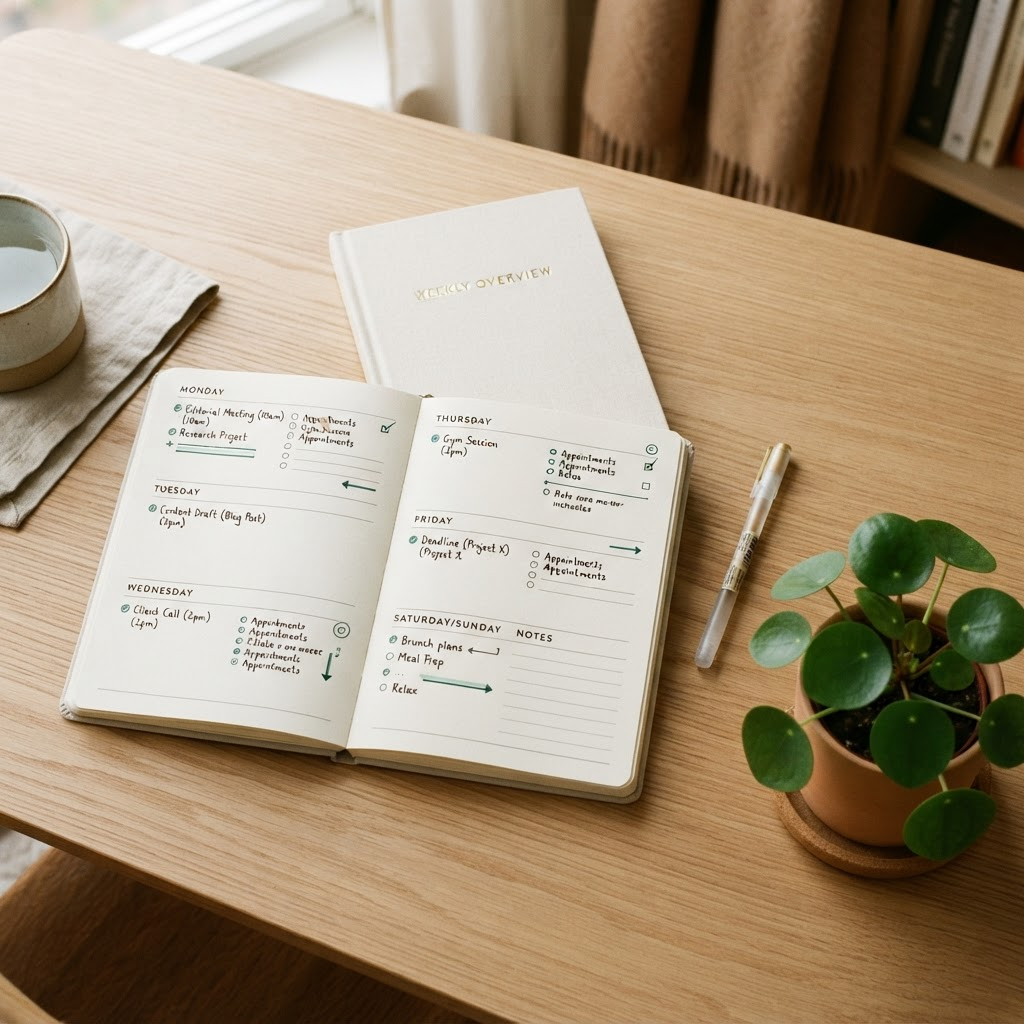
Most weekly plans fall apart not because they are poorly designed, but because they ask us to become a different person overnight. A rhythm that lasts is one that fits the life you already have while gently nudging it in a better direction. The goal is clarity, not rigidity.
Start by watching, not overhauling
Before changing anything, take two to four weeks to simply notice how your days actually unfold. You are gathering information, not passing judgment. Many people find that this observation period alone shifts their habits, because attention is a powerful tool on its own.
Group your week into three honest buckets
- Essentials: sleep, meals, work, and the commitments you cannot skip.
- Growth: focused work, learning, and the projects that move you forward.
- Flexible: everything that makes daily life enjoyable, from hobbies to rest.
There is no single correct split between these buckets. A helpful starting point is to protect your essentials first, reserve a steady block for growth, and leave real room for flexible time, but your circumstances may call for something different. Treat any structure as a conversation starter, not a rule.
A weekly rhythm is a plan for your values, written in the language of time.
Review gently, on a schedule
Set a recurring fifteen-minute check-in, perhaps on the first Sunday of each month. Ask what worked, what felt tight, and what you would adjust. Small, regular corrections are far easier to sustain than a dramatic overhaul once a year.
This article is general educational information and is not personalized advice. For guidance specific to your situation, consider speaking with a qualified professional.
Disclosure: ValueAtTheCore publishes general educational content. This article is not personalized medical, legal, or professional advice. See our editorial policy and advertising disclosure for more.